Writer/Director Agreement
This Writer/Director Agreement is a legally binding contract where a business engages an individual as both scriptwriter and director for a short film.
It sets out the terms and conditions on which the writer/director will write and deliver the screenplay, direct the film through pre-production, principal photography and post-production, and grant the producer the rights needed to develop, produce, distribute and exploit the film.
To view our Script Writer Agreement, click here. To view our Director Agreement, click here.
Scroll down to the downloads button to view our Agreement.
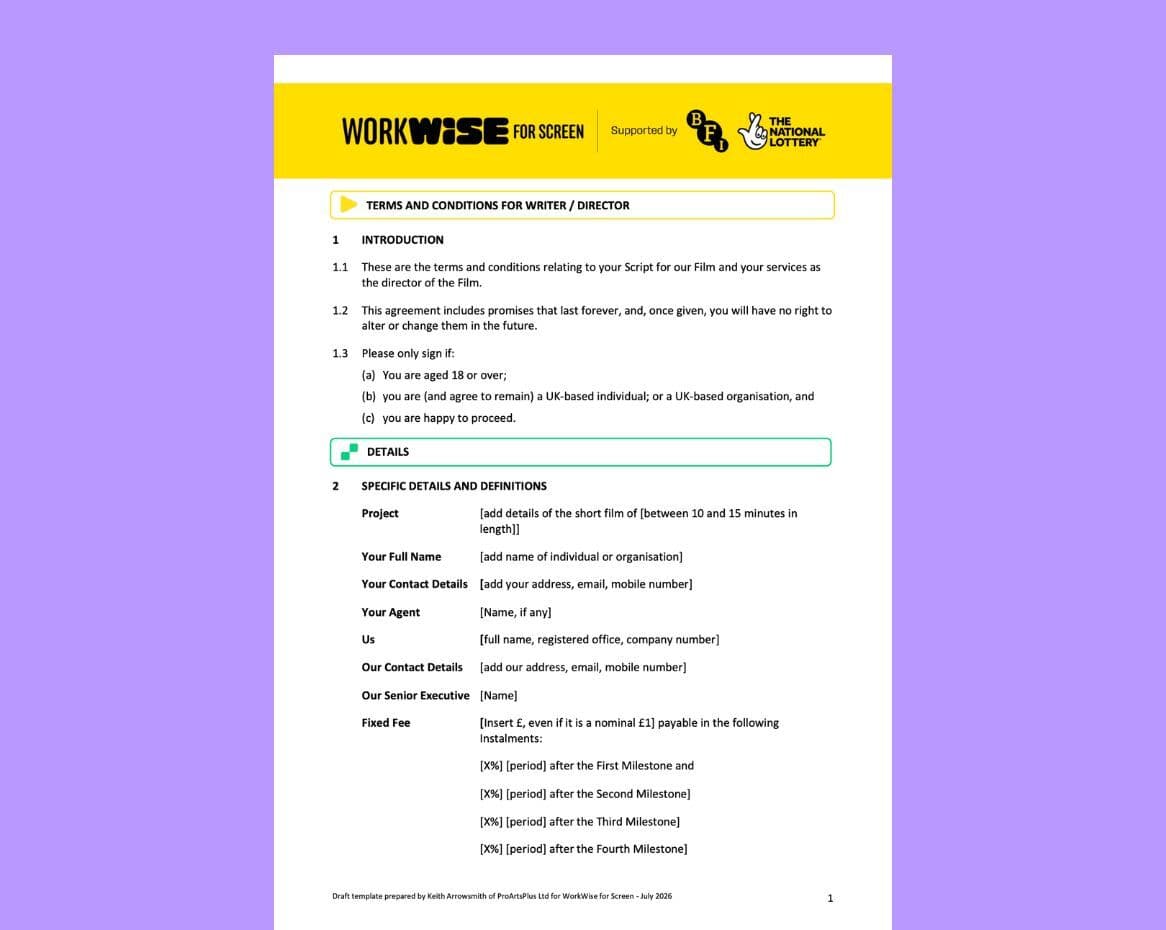
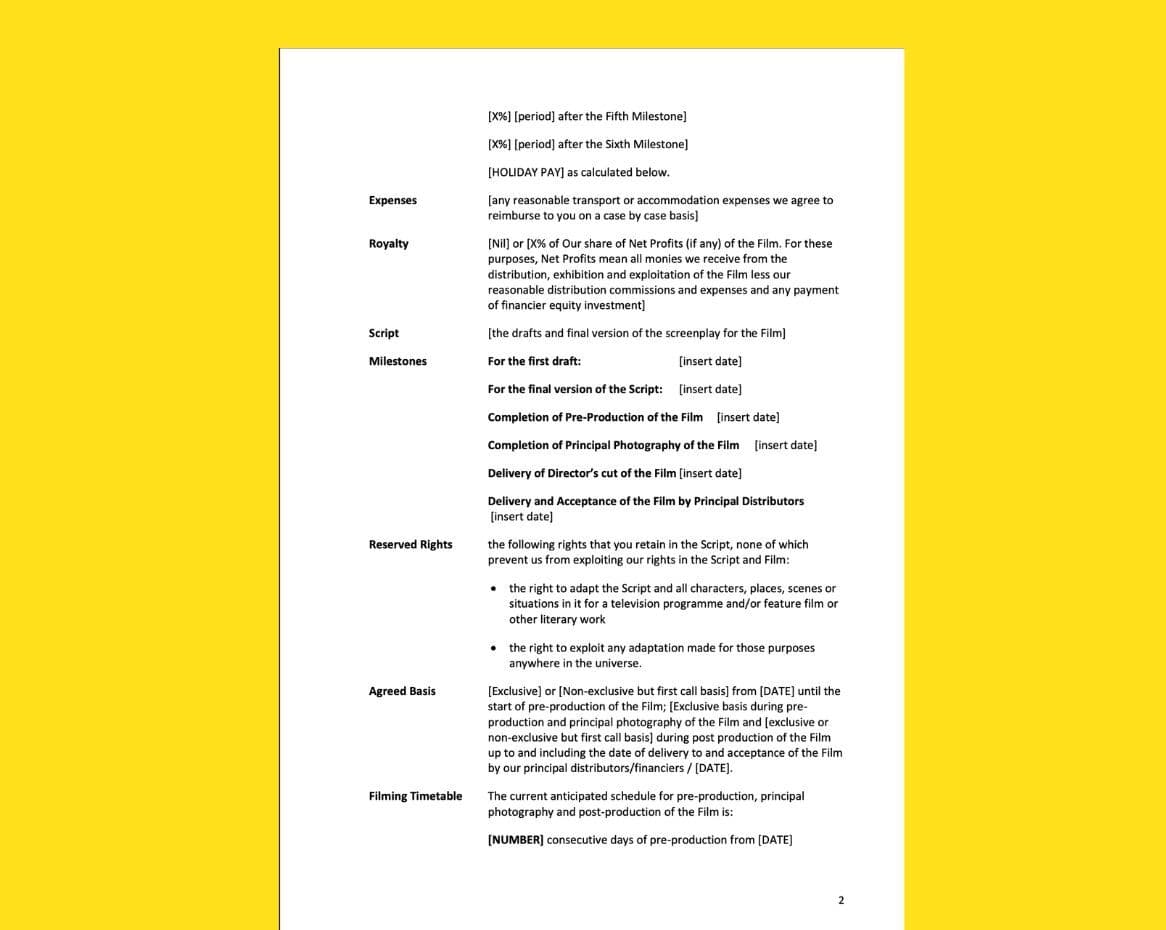
Agreement preview
What's it about?
For the scriptwriting, it explains:
- how and when the writer will deliver the script and any revisions;
- how the writer will be paid, including any fixed fees, expenses and royalties;
- who owns and controls the copyright and other intellectual property rights in the script and the film;
- the producer’s right to develop, alter, exploit or not use the script;
- confidentiality, publicity, credit and professional conduct; and
- how disputes will be resolved and how the agreement may be ended.
For the Director’s services, it explains:
- the basis of the director’s engagement, availability and filming timetable;
- the director’s role in pre-production, filming and post-production, including involvement in the edit;
- who owns and controls the copyright and other intellectual property rights in the film;
- the producer’s final control over the finished film and any required changes;
- confidentiality, publicity, credit and professional conduct;
- Fees, expenses, royalties, holiday pay and any promotional activities; and
- how disputes will be resolved and how the agreement may be ended.
This Agreement applies to workers who are engaged to both create the script and direct the film. It therefore includes provisions on working hours and holiday pay, to reflect the rights and protections that apply to workers under UK law.
Important: This Agreement should be read as a legally binding contract. Once signed, many of the rights and obligations are permanent and cannot be changed or withdrawn.
Who is this Agreement for?
This Agreement is for:
- businesses commissioning scripts for short films of between 10 and 15 minutes in length; and
- Workers providing scriptwriting and director services for one project.
The screen industries often involve freelance work, short-term contracts, power imbalances and informal working environments, making it especially important that expectations around behaviour are clear, consistent and widely understood.
It is designed to be used with:
- short film development production agreements;
- the CEDR mediation process;
- BFI guidance on anti-bullying, harassment and racism; and
- Copyright, Designs and Patents Act 1988.
What this Agreement is not?
This Agreement is not intended to:
- act as a contract of employment;
- create a relationship of employment of between the parties; or
- be used for freelancer engagements where the individual is genuinely self-employed.
This model Agreement may help to explain common provisions found in Pact UK contracts, enabling your business to better understand the relevant terms and adapt them where necessary to suit your needs. Pact UK negotiates with unions such as Bectu and Equity to produce industry-standard model contracts for independent production companies in the UK. These model agreements are accessible via a paid membership.
Why the Writer/Director role matters?
The script is a foundational part of a film. Clear agreement on authorship, ownership, payment and creative control helps protect both the writer and the business. This in turn reduces the risk of disputes and supports successful and compliant working relationships within the screen industries.
It is common in the production of short films for the same individual to act as both writer and director. This often reflects the writer’s creative connection to the material, and a desire to see the script realised as intended.
The director plays a central role in shaping how material is realised on screen. Clear agreement on scope of the director’s role, creative input and decision-making helps ensure that the film can be delivered to the required standard.
This Agreement is therefore intended to balance creative contribution with the commercial and practical realities of producing short films.
Our commitment to best practice in the screen industries?
This Agreement reflects best practice guidance developed for the UK screen industries and aligns with recognised industry standards, including: