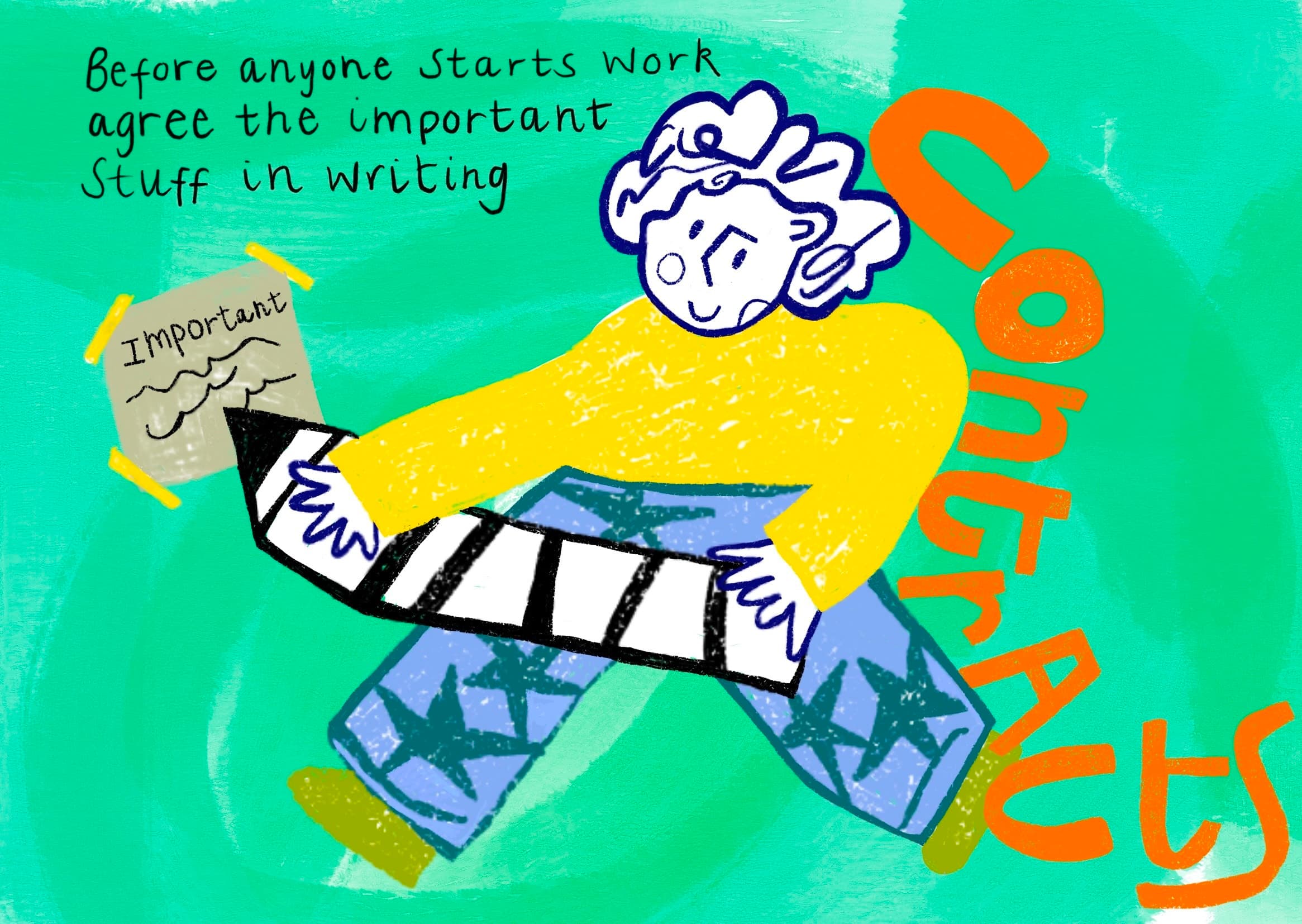
Before Anyone Starts Work, Agree the Important Stuff in Writing
A good contract isn’t just paperwork, it’s a foundation for trust. When people understand what’s expected, and what they can expect in return, work feels fair, safe and professional. Contracts don’t exist to trap people; they exist to set shared standards and protect relationships.
In the screen industries, where projects move fast and teams change regularly, a clear contract is a quiet sign of respect. It says: we take this work seriously, and we value each other enough to make things clear from the start.
If you would like a printed version of the entire series when its published, then please contact us on hello@workwiseforscreen.org.uk
Clarity builds trust
What to include?
Clarity is one of the most powerful forms of respect in any working relationship. A contract turns clarity into commitment; it gives both sides confidence that they’re on the same page, reducing the risk of misunderstanding later on.
Screen work can be complex, but your contract doesn’t have to be. Aim for plain English and only what’s necessary for the job at hand.
Keep it proportionate
For short engagements, a short agreement often works best. For long-form or higher-risk projects, add schedules for deliverables, timelines, and rates to keep the core terms readable. Sometimes its more important to get the working relationship right, that worry about every little detail of what might go wrong at some point in the future.
A fair, plain-English contract isn’t about legal jargon, it’s about helping people create a mutually agreeable and understandable record of their rights and obligations.
Payment, changes & resolving issues
Fees and coping with changes can be sensitive subjects, but being open about them from the start sets a tone of professionalism and fairness. It prevents disputes, avoids delays, and gives freelancers and teams confidence that they’ll be treated properly. It might also be worth considering setting out a simple dispute resolution process which could include mediation. Everyone benefits if a solution can be found rather than resorting to threats to launch a court case.
Good Work in practice
Fair, plain-English contracts are more than a legal formality. They’re a commitment to fairness, respect, and clarity, values that help people work safely and creatively together.
In the screen industries, a well-drafted contract can make the difference between a stressful project and a great one. It protects everyone involved, supports open communication, and lays the groundwork for lasting professional relationships.
That’s how clear agreements create good work, and how good work builds better industries.
This article is written by Michael Birks, Paralegal at ProArtsPlus.