Complaints Procedure
This Complaints Procedure explains how complaints about work or conduct can be raised, considered and resolved.
Hit save to bookmark it to your WorkWise for Screen profile.
Scroll down to the downloads button to view our Policy.
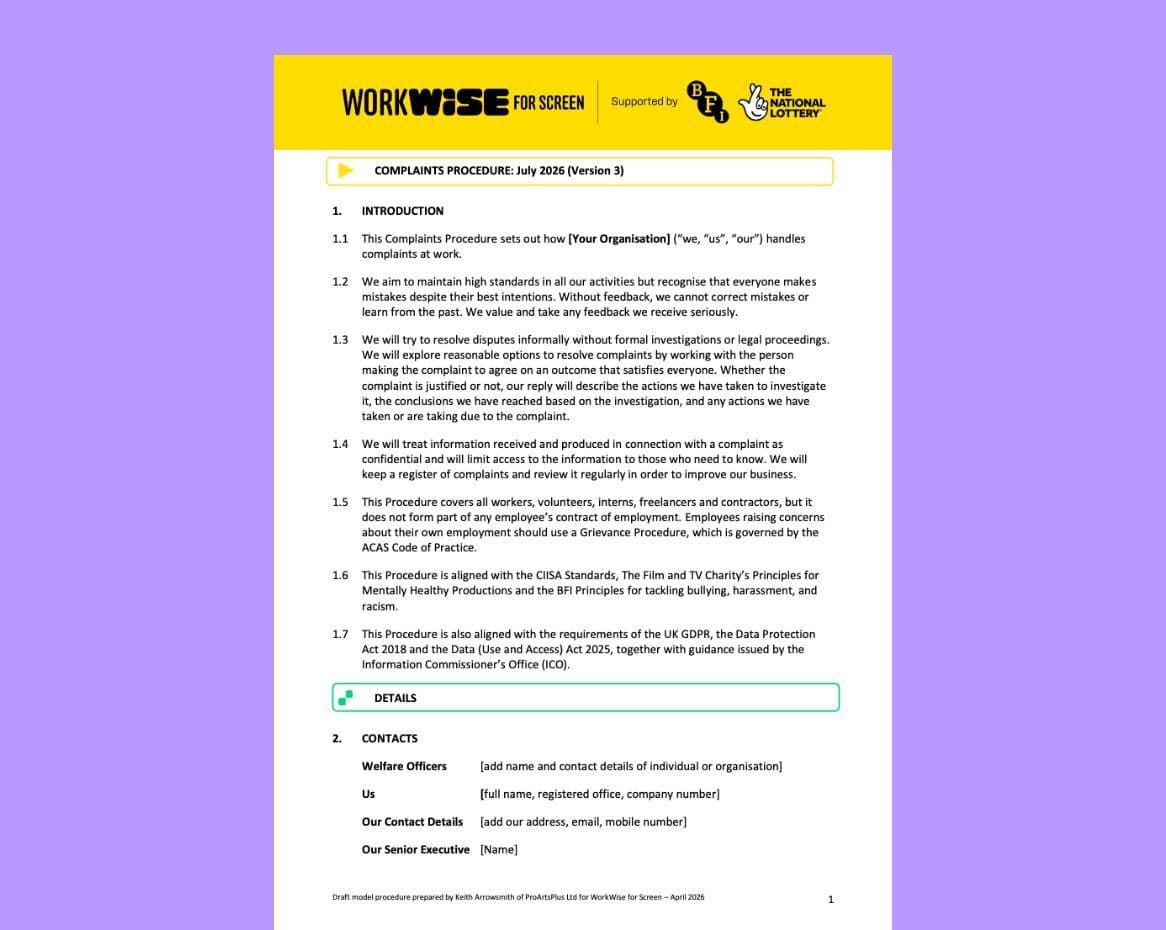
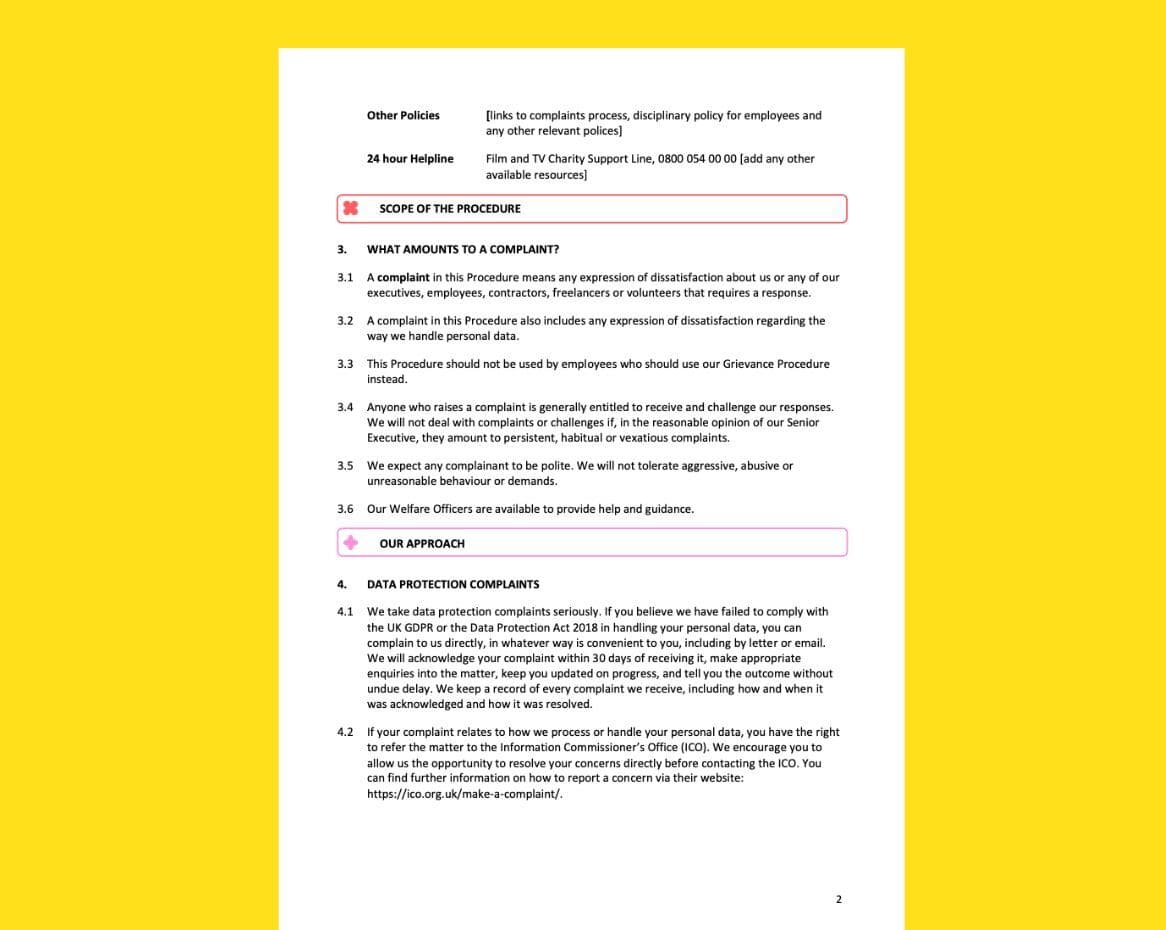
What’s it about?
This Complaints Procedure explains how complaints about work or conduct can be raised, considered and resolved.
It explains:
What amounts to a complaint;
how to make a complaint and what information to provide;
how complaints should be handled fairly, proportionately and confidentially;
the timescales that apply; and
how complaints help us learn, improve and maintain high standards.
This Procedure applies to complaints about services, activities, decisions, communications and work-related interactions, including the conduct or behaviour of executives, employees, workers, freelancers, contractors, volunteers or representatives.
This Procedure should be read as both a statement of good practice in complaints handling and a practical guide to complaints processes.
Who is this Procedure for?
This Procedure is for screen business dealing with:
members of the public and external stakeholders;
freelancers, contractors, suppliers and collaborators;
partners and organisations working together on projects; and
anyone who wishes to make a complaint about services, activities or conduct.
Because work in the screen industries often involves short-term engagements, freelance relationships and complex working arrangements, it is particularly important that complaints processes are clear, accessible and applied consistently.
What this Procedure is not
This Procedure is not intended to:
deal with employee grievances, which are managed through grievance procedures in line with the ACAS Code of Practice;
replace informal discussion where issues can be resolved quickly and constructively;
address matters outside the scope of the businesses’ responsibility or control;
tolerate aggressive, abusive or unreasonable behaviour; or
be used to pursue bad-faith complaints.
Concerns raised in good faith should always be taken seriously and handled fairly. However, knowingly false, malicious or abusive complaints may be declined or addressed through appropriate measures.
Why complaints matter
Complaints play an important role in maintaining high standards, identifying problems and improving practice. They provide an opportunity to learn from mistakes, address concerns early and strengthen trust in working relationships.
Effective complaints handling:
supports accountability and transparency;
helps prevent issues from escalating;
promotes fairness and consistency; and
contributes to a respectful and responsible working culture.
Our commitment to best practice in the screen industries
This Procedure reflects best practice in complaints handling for the screen industries and aligns with recognised standards and guidance, including:
The Film and TV Charity's Principles for Mentally Healthy Productions;
BFI Principles for tackling bullying, harassment, and racism; and
Complaints processes should be kept under regular review to ensure they remain effective, accessible and aligned with current legal and industry expectations.
- Why You Should Consider Mediation to Resolve Disputes
- When Conflict at Work is Getting Out of Hand, Consider Mediation
- The Quiet Power of Small Conversations and Quick Feedback in the Screen Sector
- Module: Understanding Unfair Dismissal
- Working Towards Better Management Practices in the UK Screen Industries
- From Emails to Internal Chat: Applying the Communications Act 2003 to Workplace Harassment
- Tackling Abusive Messages: Legal Responsibilities in the Screen Industries
- Module: Tackling Misogyny in the Screen Sector
- Signpost: How to Work Well With Your Crew questionaire - The Whole Picture Toolkit
- Module: Why Your Voice Matters When Things Go Wrong